Blog

Posted by: 
Dominique De Cooman

AI makes execution cheap. It makes context, coordination, governance and sovereignty more valuable.

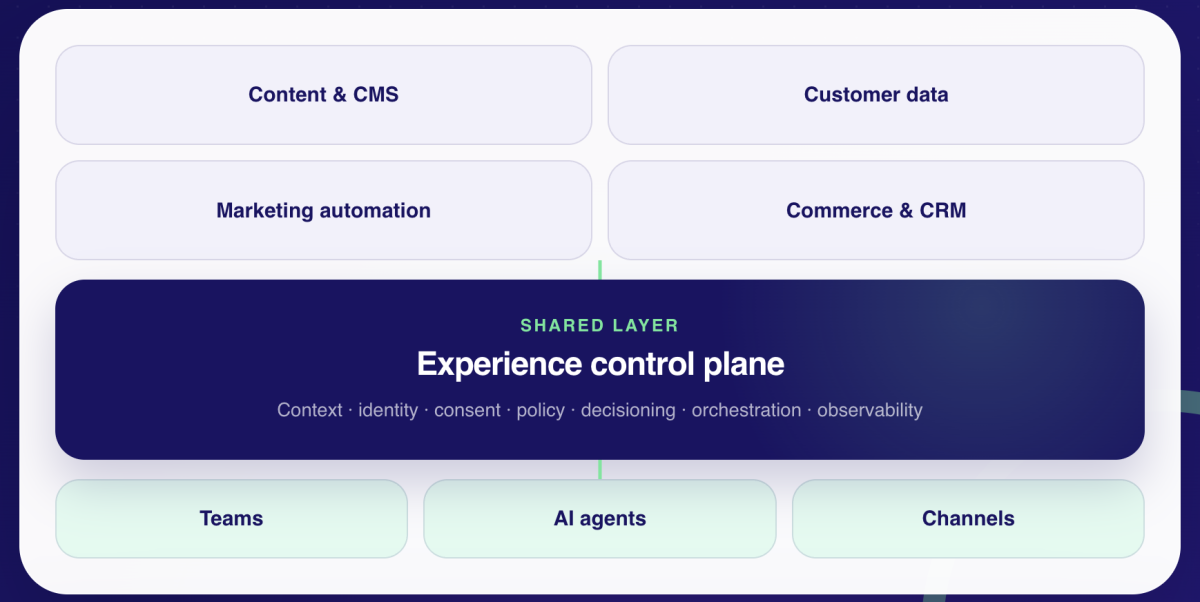
The CMS is being unbundled into a control plane and an execution plane. Follow that logic across the full customer experience and something else becomes visible: the DXP is being rebundled as the shared control plane for an organisation’s digital promise.

Posted by: 
Dominique De Cooman
Some places do not merely offer a view. They give you direction. Athens did that to me. During Drupal Dev Days, I found myself looking at the Acropolis from a distance. The Parthenon was there, standing above the city, glowing with a presence that is difficult to describe if you have not seen it in person.

Posted by: 
Dominique De Cooman
Agents need somewhere to live. And once content becomes data, the CMS that holds it becomes strategic.
Posted by: 
Dominique De Cooman
Lately I’ve been asking myself a question that many founders probably recognize but rarely say out loud: Is this problem really important enough?
Posted by: 
Dominique De Cooman

In the Dropsolid diaries series, I talk in-depth about the journey of Dropsolid company that has Drupal at its core. It contains Drupal insights, company insights, personal experiences, DXP and CMS market insights, and many other learnings I learned as the founder of Dropsolid & Dropsolid AI.

(Note: I usually don't post the Dropsolid Diaries post to the Drupal planet but this time I believe it contains valuable business insights that matter for Drupal.)

Posted by: 
Dominique De Cooman

A confession: I used to think “lock‑in” was the price of speed. You picked a big suite, signed the contract, and got on with the real work. Then I watched too many teams hit the same wall: costs up, agility down, compliance headaches, mysterious AI we couldn’t inspect, and “exit clauses” that weren’t exits.

In the last few years, especially as AI took center stage, I changed my mind. The stack you own is the only stack that scales with you. That’s why I advocate Mautic inside an open DXP with Drupal and a CDP. It’s not about software tribalism. It’s about strategy.

Posted by: 
Dominique De Cooman

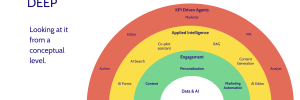
The digital experience industry is at a crossroads. We’ve spent the past decade evolving from simple CMS websites to full-fledged Digital Experience Platforms (DXPs) that promised to manage every touchpoint. Yet, as we stand in 2025, it’s clear that the next leap forward won’t come from yet another all-in-one platform. It will come from a new philosophy altogether. I call this new paradigm DEEP, or Digital Experience Enablement Platform. At its core, DEEP is about moving from delivering static, vendor-defined platforms to enabling dynamic, intelligent ecosystems.

Posted by: 
Dominique De Cooman

I watched the Openai Jony Ive video https://openai.com/sam-and-jony/ and I couldnt help to speculate

Imagine a Guardian Angel Around Your Neck

Picture a beautifully designed, subtle pendant-like device that you effortlessly wear around your neck. This futuristic innovation would become a seamless part of your daily life, quietly observing, learning, and supporting you.

Posted by: 
Dominique De Cooman

Introduction

Over the past few weeks, the Drupal community has been buzzing with discussions about the future of Drupal. A series of posts by Josh Koenig of Pantheon—criticizing Acquia, Drupal leadership, and the very concept of Open DXP—has stirred emotions (here and here).

Posted by: 
Dominique De Cooman

1. Estimated Investment from the Long Tail of Tech Companies:

The "long tail" of tech companies, including smaller tech firms, startups, and medium-sized businesses, will likely make significant investments in AI. This includes companies that don’t have the scale of the "Magnificent Seven" but still contribute significantly. There are various ways to estimate this, but considering the breadth of the tech industry, the immense growth in AI investments (even from smaller companies), and the increasing number of AI-first startups, we can assume that the long tail’s investment will be between $200 billion and $300 billion in 2025.

Pages

Subscribe to Blog